Stormwater Permits for Construction Sites and Industrial Land
Rain falling on a disturbed site or an exposed industrial yard becomes a regulated discharge the moment it leaves through a conveyance. The permit is usually a standard one, obtained by filing a notice rather than by negotiation, and the written plan is where nearly every violation is found.
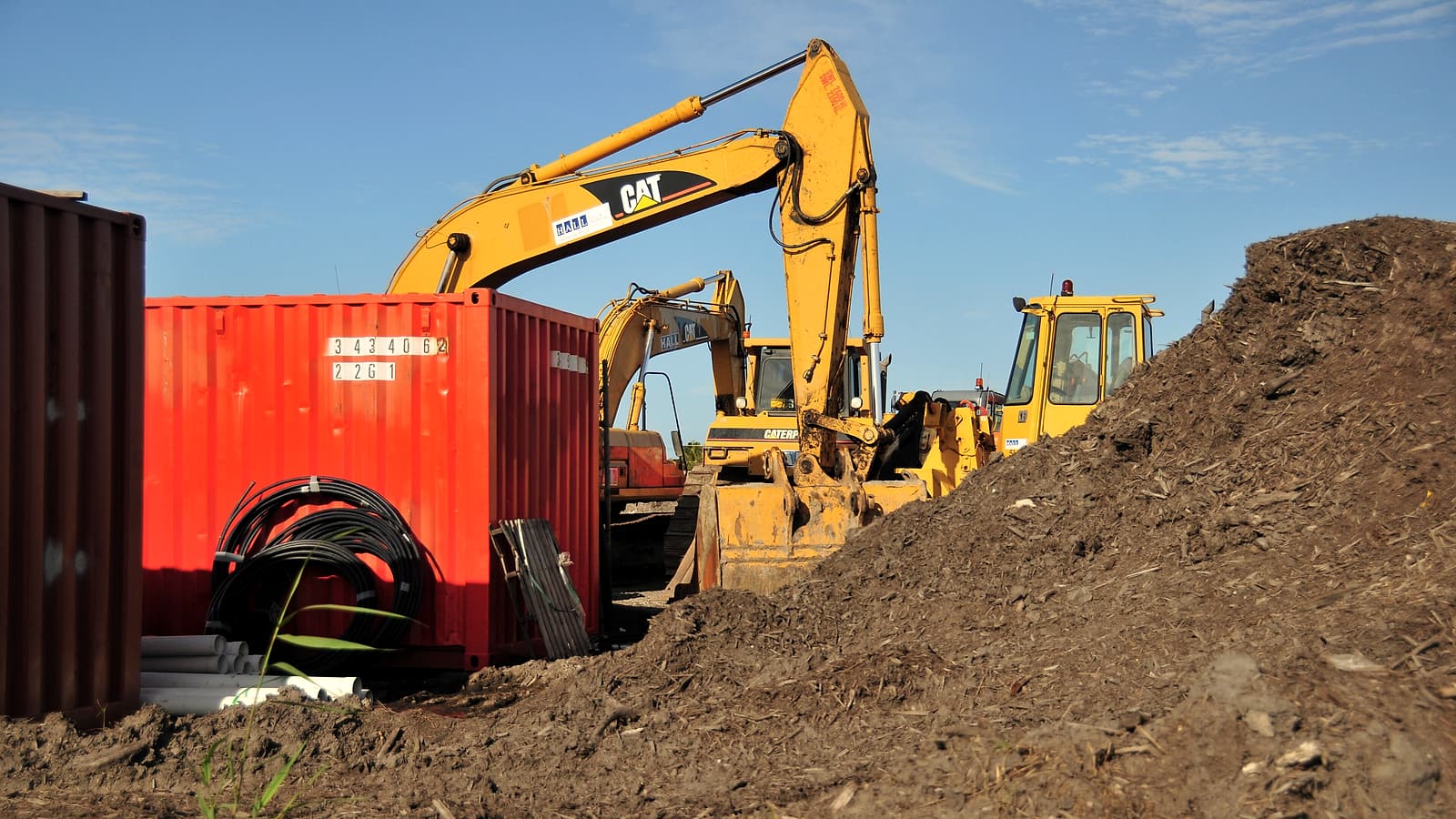
The rule in short
Stormwater associated with construction activity disturbing one acre or more, and stormwater associated with activity in one of the listed industrial categories, requires permit coverage. Coverage is normally obtained under a general permit by filing a notice of intent after a pollution prevention plan has been prepared. The plan, the inspection records and the corrective action entries are the compliance record, and coverage ends only on a filed notice of termination.
Stormwater is regulated because it is a discharge like any other. Section 402(p) of the Clean Water Act brings stormwater associated with industrial activity and stormwater from construction sites into the permit program, and the implementing rule at 40 CFR 122.26 does the work of saying which sites those are. The threshold question is not whether a site pollutes, but whether it falls inside a category.
The two coverage triggers
Construction coverage turns on disturbed area. A site that will disturb one acre or more of land requires permit coverage, and so does a smaller site that is part of a larger common plan of development or sale that will ultimately disturb one acre or more. That second clause captures the individual lot inside a subdivision, and it is the most frequently missed trigger in the program. Clearing, grading and excavation all count as disturbance; routine maintenance to preserve original line and grade generally does not.
Industrial coverage turns on category rather than acreage. The rule lists categories of facility, described partly by standard industrial classification and partly by narrative, and a facility inside one of them needs coverage for stormwater that comes into contact with the industrial activity. Manufacturing, mineral extraction, hazardous waste treatment and disposal, landfills, recycling facilities, steam electric generation, transportation maintenance yards and treatment works of a defined size all appear on the list. A facility whose only outdoor activity is employee parking is generally not covered even where the classification would otherwise fit.
The plan comes first, then the notice
Order matters here in a way it does not in most permit programs. The stormwater pollution prevention plan must be prepared before the notice of intent is submitted. Filing the notice first and writing the plan later is itself a violation, and it is easy for an inspector to establish from the two dates on the documents.
The plan identifies the operator and the site, describes the activity and the drainage, identifies pollutant sources, selects control measures, and sets an inspection and maintenance schedule. For construction it addresses erosion and sediment control, the sequence of major activities, stabilization practices, pollution prevention for materials on site, and the allowable non-stormwater discharges. For industrial sites it adds the site map with outfalls and drainage areas, a description of exposed materials, spill prevention measures, employee training and, where the sector requires it, benchmark monitoring.
The plan is a living document. It must be amended when the design changes, when a control measure proves ineffective, or when an inspection identifies a condition it does not address. A plan matching the original drawings but not the site as built is the ordinary inspection finding.
General permits set a waiting period between the submission of a complete notice of intent and the start of authorized coverage. Earth-disturbing work that begins before that period runs is discharging without authorization, no matter how complete the paperwork was. The same trap catches operators who file a notice with an error and assume the clock started; a corrected notice generally restarts it. Confirm the acknowledgment or tracking number before mobilizing equipment.
Inspections, corrective action and stabilization
Once coverage begins, the permit imposes a routine. Site inspections occur on the frequency the permit sets, with an additional inspection after a qualifying rainfall, and each inspection is documented in a report that records what was observed, what was deficient and what was done. Corrective action deadlines run from discovery, not from the next scheduled inspection.
Construction permits carry non-numeric effluent limits drawn from the construction and development effluent guideline: control stormwater volume and velocity, control discharges from soil stockpiles, minimize the disturbed area at any one time, provide and maintain natural buffers where feasible, and prohibit the discharge of concrete washout, wastewater from equipment washing, fuels and oils. Stabilization must begin immediately where earth-disturbing activity has permanently or temporarily ceased, and be completed within the period the permit states.
Industrial permits add sector-specific control measures and, for many sectors, benchmark monitoring — sampling against a value that is not an effluent limit but a trigger. Exceeding a benchmark does not violate the permit; failing to evaluate the exceedance and take corrective action does.
The routes compared
| Route | What qualifies | How coverage starts | Recurring obligations | How it ends |
|---|---|---|---|---|
| Construction general permit | One acre disturbed, or part of a larger common plan | Plan prepared, then notice of intent, then the waiting period | Routine and post-storm inspections, corrective action, stabilization | Notice of termination after final stabilization |
| Industrial general permit | Facility within a listed industrial category | Plan prepared, then notice of intent under the applicable sector | Quarterly visual assessment, benchmark and any effluent monitoring, annual report | Notice of termination on closure or loss of exposure |
| No exposure exclusion | All industrial materials and activities sheltered from precipitation | Certification filed with the permitting authority | Maintain the sheltered condition; recertify on the stated cycle | Lapses automatically once exposure returns |
| Individual stormwater permit | Sites the authority declines to cover generally, or that request it | Full application, draft permit, public comment | Site-specific limits and monitoring written into the permit | Expiration or revocation |
The no exposure route is worth attention. An industrial facility that moves all materials, equipment and activities under a roof or into a storm-resistant enclosure may certify to that condition and step out of permitting entirely, subject to periodic recertification. The exclusion is conditional: one drum stored outside undoes it, and the facility is then discharging without coverage.
Termination, transfer and the cost of leaving it open
Coverage does not end when the work does. It ends when a notice of termination is filed and the conditions for termination are met — final stabilization achieved, all temporary controls removed, and no remaining discharge from the site. Until then the permittee owes annual fees, remains subject to inspection, and remains liable for whatever leaves the property. Abandoned coverage on a completed project accrues penalty exposure per day.
Where the permitting authority is a state agency, its forms, fees and filing system control, and the state may add requirements. Sites that also handle regulated wastes carry parallel duties that are not satisfied by the stormwater plan, including the container and accumulation rules described in the generator categories and their duties. A release on a permitted site can trigger separate notification on its own clock, set out in the release reporting rules. And a project on land with a prior industrial history should be evaluated before closing rather than after, using the standard in the pre-purchase environmental inquiry. Discharges from the completed facility itself, as opposed to the construction phase, fall under the framework in the discharge permit rules.
Points to carry away
- Construction disturbing one acre or more requires permit coverage, including smaller sites in a larger common plan of development.
- Industrial coverage turns on the facility falling within one of the listed categories at 40 CFR 122.26(b)(14).
- The pollution prevention plan must be prepared before the notice of intent is filed, not afterward.
- Authorization begins only after the waiting period stated in the general permit has run.
- A conditional no exposure exclusion is available to industrial sites that keep all activities and materials under cover.
- Coverage and the duty to pay fees continue until a notice of termination is filed and accepted.
Questions readers ask
Does a site under one acre ever need coverage?
Yes, in two situations. A site smaller than one acre that is part of a larger common plan of development or sale that will ultimately disturb one acre or more is covered, which captures individual lots within a subdivision. Separately, the permitting authority may designate a small site for coverage where its discharge contributes to a water quality violation or is a significant contributor of pollutants. A single small lot with no connection to a larger plan and no designation is ordinarily outside the requirement.
Who signs the notice of intent and the plan certifications?
A responsible corporate officer, or a general partner or proprietor for an unincorporated business, or a principal executive officer for a public agency. That authority may be delegated in writing to a manager of the facility or site, and the written delegation must be submitted to the permitting authority. Inspection reports are usually signed by a qualified person designated in the plan. A signature by someone outside the chain of authority is a paperwork violation that carries into every document that person signed.
What happens to coverage when the site changes hands mid-project?
Coverage does not transfer automatically. The incoming operator files its own notice of intent and the outgoing operator files a notice of termination for the portion it no longer controls. Until the new operator is authorized, the departing one remains the permittee of record and remains responsible for the discharge. Where a developer sells finished lots to builders, each builder that will disturb land normally needs its own coverage or must be named as a co-permittee under the arrangement the permit allows.
Sources
- Cornell Legal Information Institute — 33 U.S.C. 1342, National Pollutant Discharge Elimination SystemSubsection (p) is the statutory basis for regulating municipal and industrial stormwater.
- eCFR — 40 CFR 122.26, Storm Water DischargesThe industrial category list, the construction thresholds and the no exposure exclusion.
- eCFR — 40 CFR Part 122, EPA Administered Permit ProgramsGeneral permit mechanics, signatory authority and standard permit conditions.
- eCFR — 40 CFR Part 450, Construction and Development Point Source CategoryThe national effluent guideline that supplies the non-numeric limits construction permits carry.
- U.S. Environmental Protection Agency — Stormwater Discharges From Construction ActivitiesThe construction general permit, its notice of intent process and the plan requirements.
- U.S. Environmental Protection Agency — Stormwater Discharges From Industrial ActivitiesThe multi-sector general permit, sector-specific requirements and benchmark monitoring.
Lawwise is a publication, not a law firm. This article states general rules and cites its sources; it is not advice about any particular case, and the law differs by state and changes over time.
More in Environmental Law
All Appropriate Inquiries Before Buying Land
All appropriate inquiries is the pre-acquisition investigation required for the innocent landowner, bona fide prospective purchaser and contiguous property owner protections. It must be performed by or under the supervision of an environmental professional meeting stated qualifications, must include specified inquiries and user-supplied information, must be completed within one year before acquisition, and must have five components updated within one hundred eighty days of acquisition.

Citizen Suits: Notice, Standing and the Diligent Prosecution Bar
Most federal environmental statutes authorize any person to sue a violator or the administrator, after serving notice on the agency, the state and the alleged violator. The waiting period is sixty days for most claims and ninety days for endangerment claims under the waste statute. The suit is barred where the agency or state has commenced and is diligently prosecuting a qualifying action. Remedies are injunctive relief, penalties payable to the Treasury, and litigation costs.
Contaminated Land Liability and the Defenses to It
Four classes of person are liable for response costs at a contaminated site: the current owner or operator, the owner or operator at the time of disposal, a person who arranged for disposal or treatment, and a transporter who selected the site. Liability is strict, retroactive and often joint and several. The statute supplies only three defenses, and the practical protections for purchasers and neighbors require pre-acquisition inquiry plus continuing obligations.