Hazardous Waste Generator Categories and the Duties of Each
A facility's obligations under the hazardous waste rules are not fixed by its industry or its size. They are fixed by how many kilograms it generated in a calendar month, recounted every month, with the heaviest set of duties attaching the moment a single month crosses one thousand kilograms.
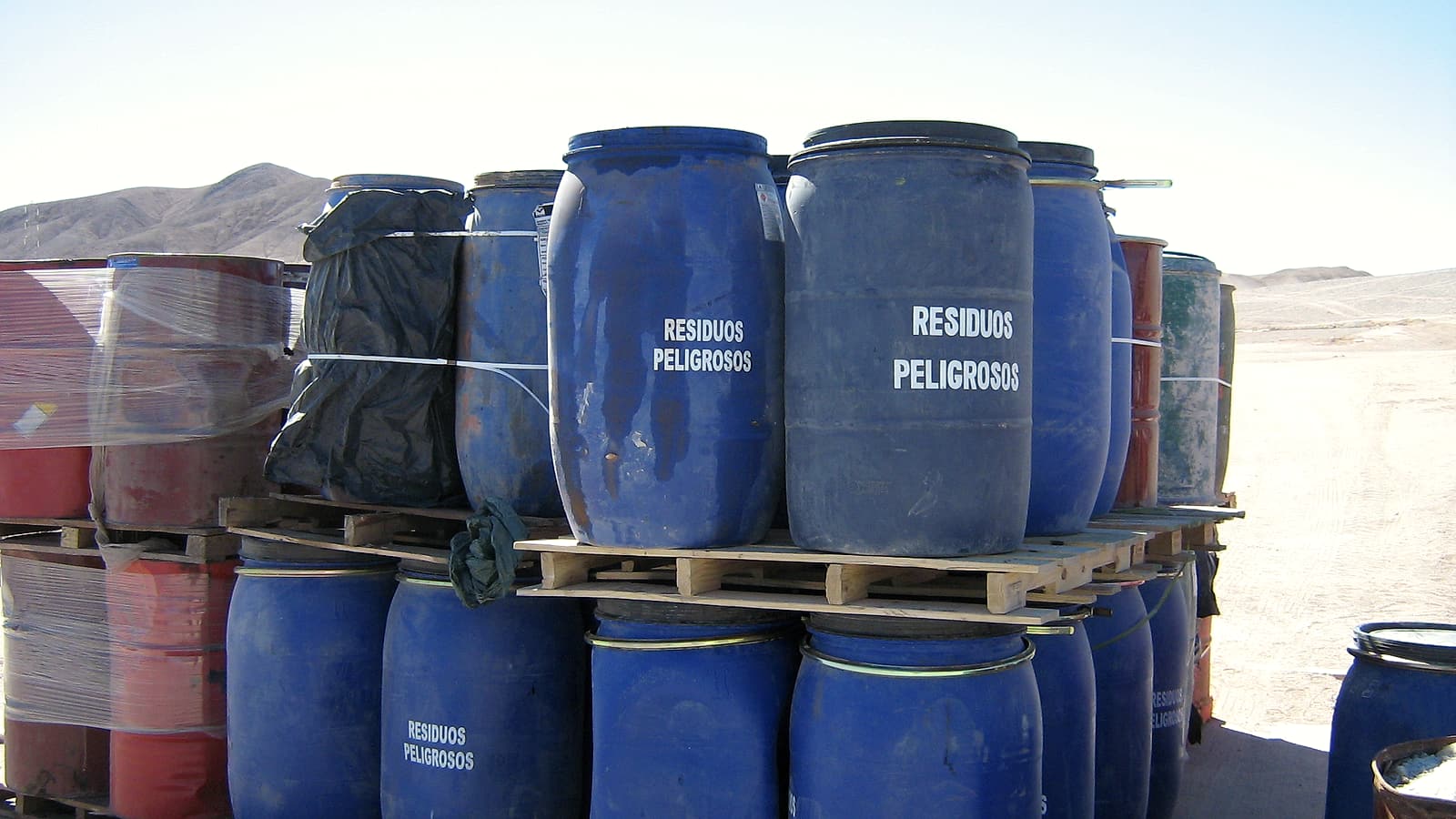
The rule in short
Generators fall into three categories determined by the quantity of hazardous waste generated in a calendar month: very small quantity generators at or below one hundred kilograms, small quantity generators above one hundred and below one thousand kilograms, and large quantity generators at one thousand kilograms or more. Acute hazardous waste has its own far lower thresholds. Category determines accumulation time, container standards, training, contingency planning and reporting.
Everything in the generator rules follows from one number: the kilograms of hazardous waste a site generated in a calendar month. That figure is recalculated each month. A facility can be a small quantity generator in one month, a large quantity generator in the next because of a one-time cleanout, and back again the month after — with the heavier duties attaching in the month the threshold was crossed.
The thresholds and the acute waste override
A very small quantity generator produces no more than one hundred kilograms of hazardous waste in a calendar month. A small quantity generator produces more than one hundred and less than one thousand kilograms. A large quantity generator produces one thousand kilograms or more. Those figures are the ones most people know.
The acute thresholds are the ones that catch facilities out. Generating more than one kilogram of acute hazardous waste in a month makes the facility a large quantity generator for that month, whatever the total volume. So does generating more than one hundred kilograms of soil, water or debris from the cleanup of a spill of acute hazardous waste. Acute wastes are the listings designated with the hazard code identifying acute toxicity, and a single small container of one of them can move a facility two categories in a single month.
Counting includes waste that is accumulated on site, treated on site, or shipped off site. It excludes residue in a container emptied under the rule, waste managed immediately upon generation in an on-site permitted or interim status unit, and waste already counted once during the month. Used oil managed under its own rules and universal waste managed under the reduced track are not counted either, which is one of the practical reasons to use those tracks where they are available; the conditions are set out in the simpler handling regimes for particular waste streams.
What each category owes
| Obligation | Very small quantity generator | Small quantity generator | Large quantity generator |
|---|---|---|---|
| Monthly generation | 100 kg or less | More than 100 kg, less than 1,000 kg | 1,000 kg or more |
| Identification number | Not required | Required | Required |
| On-site accumulation time | No time limit; 1,000 kg quantity cap | 180 days, or 270 days if shipping over 200 miles | 90 days |
| Manifest for shipments | Not required if sent to an authorized destination | Required | Required |
| Personnel training | Not required | Basic familiarity with proper handling and emergency procedures | Formal program with annual review and documentation |
| Emergency planning | Not required | Emergency coordinator and posted information | Written contingency plan and arrangements with local responders |
| Periodic report | None | None | Biennial report of the previous year's activity |
The identification number is obtained by filing the site identification form with the authorized state or the regional office. It attaches to the site, not to the company, and it does not transfer with a sale — a purchaser files its own notification.
The ninety or one hundred eighty day period runs from the date the first drop of waste enters the container in the central accumulation area, and that date must be marked and visible. Facilities routinely mark the date the container was filled or the date it was scheduled for pickup, which understates the elapsed time. A satellite container is different: its clock starts only when the volume limit is exceeded or when it is moved to central accumulation, and the three-day transfer window applies from that moment.
Manifests, signatures and the exception report
Off-site shipments travel on the uniform hazardous waste manifest, with continuation sheets where more transporters or waste streams are involved. The generator prepares it, certifies the waste minimization statement, signs it, and keeps a copy. The transporter signs on acceptance, and the designated receiving facility signs on delivery and returns a signed copy.
The follow-up is where the deadlines bite. A large quantity generator that has not received a signed copy from the designated facility within thirty-five days must contact the transporter and the facility to determine the status. If no signed copy arrives within forty-five days of shipment, the generator files an exception report with a legible copy of the manifest and a description of the efforts made. A small quantity generator's obligation is lighter: submit a copy of the manifest with an indication that the return copy was not received, within sixty days of shipment.
Manifests, exception reports and biennial reports are retained for three years, and land disposal restriction notifications travel with the shipment. Manifest submission runs through the electronic system, which carries per-manifest fees; a paper manifest still exists but the receiving facility submits it into the same system.
The one-time event and how to avoid a category change
A planned or unplanned event that pushes a facility above its normal category for a single month used to force the full set of higher duties. The episodic generation provisions offer an alternative. A very small or small quantity generator may manage one episodic event per calendar year without changing category, provided it notifies the authorized agency in advance for a planned event or within seventy-two hours for an unplanned one, obtains an identification number, manages the waste under the stated conditions, and ships it off site within sixty days of the start of the event.
The relief is narrow. One event per year, unless a petition for a second is granted. Failure to ship within sixty days pulls the facility into the category the volume would otherwise have created. For a demolition, a tank cleaning or a laboratory cleanout, planning around that sixty-day window is the difference between a notification and a year of large quantity generator obligations.
Closure, inspection and what an inspector opens first
A large quantity generator that stops using a central accumulation area must close it in accordance with the closure performance standard, with notification before and after, and must document that residues were removed and the area decontaminated. Contamination left behind surfaces at sale, where the liability framework in the contaminated land rules and their defenses governs.
Inspections follow a predictable order: the identification number and notification, the waste determinations, the container condition and labeling, the accumulation dates, the training records, the contingency plan and the manifests. Weekly inspection logs for central accumulation areas are checked against the dates on the containers. A spill during accumulation or transfer can also trigger notification duties outside the waste rules entirely, on the clocks described in the release reporting requirements. A facility that identifies a violation before the agency does should weigh the terms in the self-disclosure policy, which requires disclosure within a short fixed window after discovery.
Points to carry away
- Generator category is determined by the quantity generated in each calendar month, not by an annual average.
- One kilogram of acute hazardous waste in a month makes a facility a large quantity generator regardless of other volumes.
- Large quantity generators may accumulate waste on site for ninety days without a storage permit.
- Small quantity generators may accumulate for one hundred eighty days, extended to two hundred seventy for distant shipment.
- Satellite accumulation is limited to fifty-five gallons of hazardous waste or one quart of acute waste at each point of generation.
- A large quantity generator files an exception report if no signed manifest copy returns within forty-five days.
Questions readers ask
Does waste already counted once get counted again when it moves?
No. Waste is counted in the month it is generated, and moving it from a satellite area to the central accumulation area does not restart the count. Double counting inflates a facility into a higher category and imposes duties it does not owe. The opposite error is more common and more costly: excluding waste from the count because it was recycled on site or shipped promptly. Those exclusions exist only where the regulation grants them, and most do not turn on how quickly the waste leaves.
What is a satellite accumulation area, and what makes it lawful?
It is a container at or near the point of generation, under the control of the operator of the process producing the waste. Up to fifty-five gallons of hazardous waste, or one quart of acute hazardous waste, may accumulate there without starting the ninety or one hundred eighty day clock. The container must be in good condition, compatible with the waste, closed except when adding waste, and marked with the words identifying its contents. Once the limit is exceeded, the excess must be moved within three days.
Can a facility store waste beyond its accumulation period?
Only with an extension, and only for the reason the rule allows. A generator facing an unforeseen, temporary and uncontrollable circumstance may request a thirty-day extension from the regional administrator or the authorized state. Without one, waste held past the period converts the facility into an operator of a storage facility without a permit, which is a substantially more serious violation than the underlying accumulation. The safer response to a shipping delay is to request the extension in writing before the period runs.
Sources
- Cornell Legal Information Institute — 42 U.S.C. 6922, Standards Applicable to GeneratorsThe statutory basis for generator recordkeeping, labeling and the manifest system.
- eCFR — 40 CFR Part 262, Standards Applicable to Generators of Hazardous WasteCategory definitions, counting rules, accumulation limits, manifests and episodic generation.
- eCFR — 40 CFR Part 261, Identification and Listing of Hazardous WasteThe listings, the characteristics and the acute hazardous waste designations.
- U.S. Environmental Protection Agency — Categories of Hazardous Waste GeneratorsThe agency's own summary of the three categories and the duties attached to each.
- U.S. Environmental Protection Agency — Hazardous Waste Generator Regulatory SummaryConsolidated description of counting, accumulation, marking and reporting obligations.
- U.S. Environmental Protection Agency — e-Manifest SystemThe electronic manifest system, signature requirements and generator user fees.
- eCFR — 40 CFR Part 260, Hazardous Waste Management System: GeneralDefinitions used across the generator rules, including facility, on-site and container.
Lawwise is a publication, not a law firm. This article states general rules and cites its sources; it is not advice about any particular case, and the law differs by state and changes over time.
More in Environmental Law
All Appropriate Inquiries Before Buying Land
All appropriate inquiries is the pre-acquisition investigation required for the innocent landowner, bona fide prospective purchaser and contiguous property owner protections. It must be performed by or under the supervision of an environmental professional meeting stated qualifications, must include specified inquiries and user-supplied information, must be completed within one year before acquisition, and must have five components updated within one hundred eighty days of acquisition.

Citizen Suits: Notice, Standing and the Diligent Prosecution Bar
Most federal environmental statutes authorize any person to sue a violator or the administrator, after serving notice on the agency, the state and the alleged violator. The waiting period is sixty days for most claims and ninety days for endangerment claims under the waste statute. The suit is barred where the agency or state has commenced and is diligently prosecuting a qualifying action. Remedies are injunctive relief, penalties payable to the Treasury, and litigation costs.
Contaminated Land Liability and the Defenses to It
Four classes of person are liable for response costs at a contaminated site: the current owner or operator, the owner or operator at the time of disposal, a person who arranged for disposal or treatment, and a transporter who selected the site. Liability is strict, retroactive and often joint and several. The statute supplies only three defenses, and the practical protections for purchasers and neighbors require pre-acquisition inquiry plus continuing obligations.