Conservation Compliance: The Condition Attached to Every Benefit
A single form ties eligibility for payments, loans, disaster assistance and crop insurance premium support to two conditions about land. Neither condition is a permit, and neither can be satisfied after the fact, which is why the technical determination matters more than the paperwork.
The rule in short
A person who produces an agricultural commodity on highly erodible land without applying an approved conservation system, or who converts a wetland to make production possible, becomes ineligible for most federal farm program benefits. Eligibility is certified on a single form, technical determinations are made by the conservation agency, and relief depends on exemptions, good faith findings, restoration or mitigation rather than on the merits of the farming decision.
Conservation compliance is not a program a producer joins. It is a condition attached to nearly every benefit a producer might receive, and it operates by removing eligibility rather than by imposing a penalty. One certification covers it, and that certification is signed once and then relied on for years.
The two conditions
The first condition concerns highly erodible land. A person who produces an agricultural commodity on a field that contains highly erodible land, without applying a conservation system approved for that field, is ineligible for benefits. The system is developed with the conservation agency and recorded in a plan; applying it, not merely having it, is what satisfies the condition.
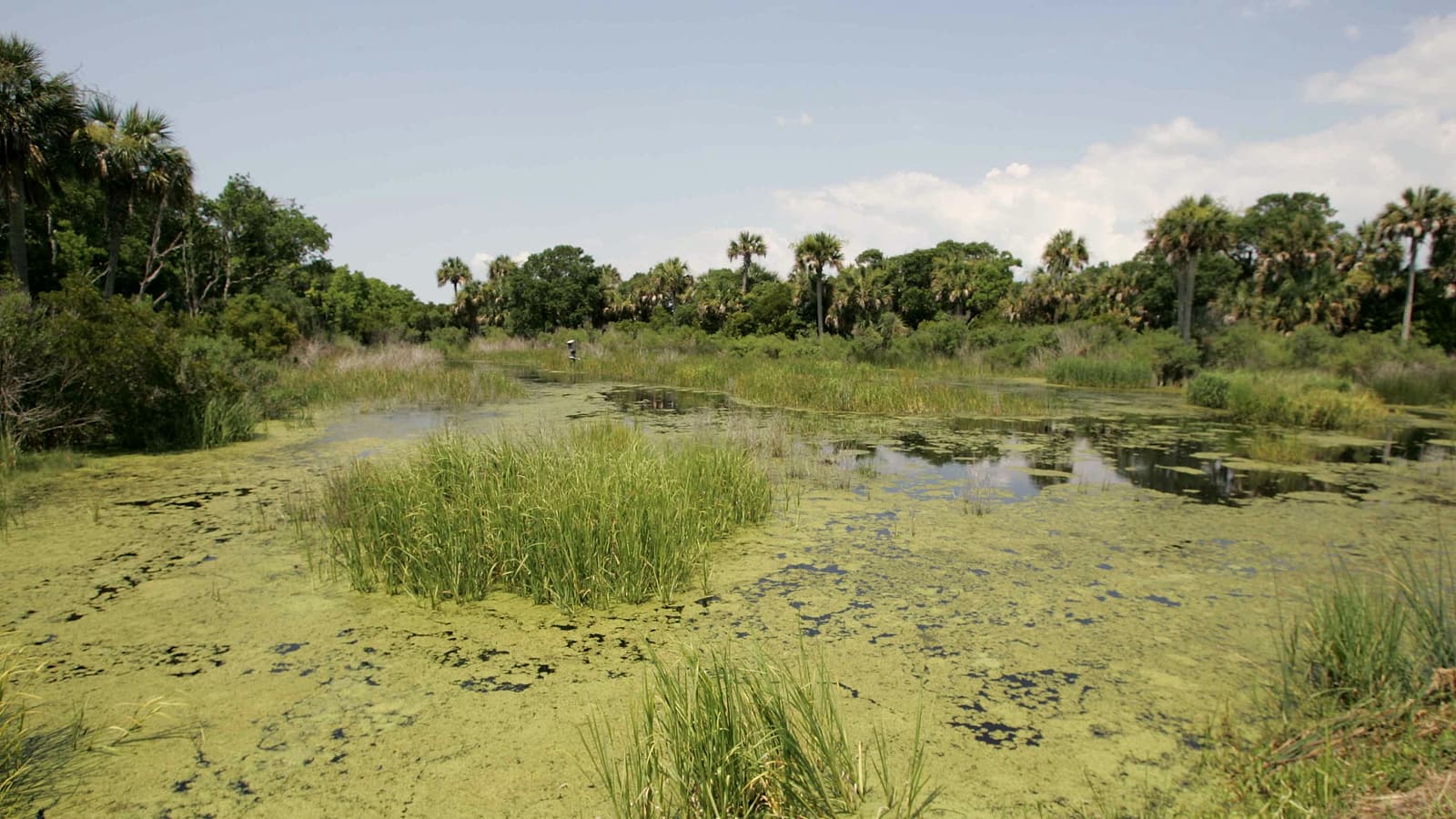
The second condition concerns wetlands. A person who converts a wetland by draining, dredging, filling, leveling or any other means, for the purpose or with the effect of making the production of an agricultural commodity possible, is ineligible. So is a person who produces an agricultural commodity on a wetland converted after the cutoff the statute fixes. The first branch does not require that anything be planted; the conversion alone is enough.
Both conditions reach a wide set of benefits: commodity program payments, farm loans, disaster assistance, conservation program payments, and premium assistance for federal crop insurance. That last item is what gives the rules their reach, since a producer who takes no commodity payments may still depend heavily on insurance support.
Who decides, and how a tract is classified
The conservation agency makes the technical determinations. It identifies whether a field contains highly erodible land, using soil survey data and erodibility indices, and it delineates wetlands and assigns each area a label — wetland, converted wetland, prior converted cropland, farmed wetland, artificial wetland, and others. Those labels govern what may be done on the ground.
Determinations are certified and remain in effect until conditions change or an error is shown. A producer who disagrees requests reconsideration and a field visit, and the deadline for doing so runs from the notice. Once final, the determination is not open to relitigation when a payment is later denied, which is why a mapped area a producer believes is farmed cropland should be addressed when the map arrives.
The certification form covers the producer, the entities in which the producer holds an interest, and the land farmed. Producers routinely sign it at the start of a relationship with the agency and never revisit it. New land brought into an operation, a change in entity structure, or work done by a contractor on a tile line can all put a signed certification out of date. The form is a continuing representation, not a one-time filing, and the consequence of an inaccurate one reaches every benefit it supports.
Exemptions and how each is established
| Exemption | What it covers | How it is established |
|---|---|---|
| Prior converted cropland | Land converted before the statutory cutoff and cropped since | Certified determination based on historical evidence and hydrology |
| Artificial wetland | Areas created by human action on land that was not previously wetland | Technical determination of origin |
| Minimal effect | Conversions with only a minimal effect on wetland functions and values | Determination requested before the conversion occurs |
| Third party conversion | Conversion caused by someone other than the producer, without consent | Showing of no control and no benefit from the conversion |
| Mitigation | Conversion offset by restoring or creating comparable wetland | Approved mitigation plan, sometimes through a mitigation bank |
| Good faith | Violations committed in good faith and without intent | Agency finding, with restoration within the period allowed |
The minimal effect row carries a timing trap. The determination is meant to be sought before the work is done. A producer who converts first and requests the determination afterward may still obtain relief, but the agency is deciding on ground that has already been altered, and the producer has lost the strongest version of the argument.
What happens after a violation is found
A determination of violation results in loss of eligibility for the crop year and generally for subsequent years until the violation is resolved. Resolution takes one of three forms: restoring the converted area to its prior condition, mitigating by restoring or creating comparable wetland elsewhere under an approved plan, or abandoning the conversion and taking the affected acreage out of production.
Where the agency finds the violation was committed in good faith and without intent to violate, it may allow the producer to retain eligibility on condition that restoration or mitigation is completed within the period set. That relief is discretionary and it is available once for a given circumstance; a repeat of the same conduct after a good faith determination is not treated the same way.
Graduated relief also exists for erodible land violations, allowing a reduction in benefits rather than complete loss where the failure to apply the conservation system was technical and the producer is actively correcting it. The amounts are set by the agency and depend on the extent of the deviation from the plan.
Where these rules meet the rest of the operation
The most common problem is not a deliberate conversion. It is maintenance work that goes further than maintenance — cleaning a ditch deeper than its original design, replacing a tile line at a lower depth, or clearing woody vegetation from an area that had reverted. Maintenance of an existing drainage system is permitted; improving it is a conversion. Documenting the original depth and capacity before work begins is the only reliable defense.
Because the conditions gate eligibility rather than authorize activity, they interact with everything else the operation files. The certification is a prerequisite to the payments governed by the payment limitation and contribution rules, and an adverse determination there travels through the same appeal system. Drainage and diversion work may separately require authorization under the federal discharge permit rules, which use their own definition of jurisdictional water and reach activities the farm rules exempt. Where irrigation supply is involved, the change may also require approval under the no-injury rule for changing a water right. And producers marketing under an order or paying assessments should note that neither the marketing order obligations nor a compliance violation affects the other.
Points to carry away
- Eligibility for program payments, loans, disaster assistance and insurance premium support all depend on the same certification.
- Highly erodible land requires an approved conservation system before an agricultural commodity is produced on it.
- Converting a wetland to make agricultural production possible causes ineligibility even if nothing is planted.
- Prior converted cropland, artificial wetlands and minimal effect conversions are exempt.
- A good faith violation may be resolved by restoration or mitigation within the period the agency allows.
- Technical determinations are made by the conservation agency and are appealable separately from the payment decision.
Questions readers ask
Does the wetland rule stop a producer from farming a wet field?
No. Farming a wetland that was already in production, or continuing to farm land that carries a prior converted determination, is not a violation. What triggers ineligibility is converting a wetland — draining, dredging, filling, leveling or otherwise manipulating it so that production of an agricultural commodity becomes possible, where it was not possible before. The distinction is between working land as it is and changing its hydrology, and the technical determination records which category a tract falls into.
How is a technical determination challenged?
Through the conservation agency's own process, beginning with a request for reconsideration and a field visit, and continuing to the appeal routes available for agency determinations. A determination becomes final if not challenged within the period stated in the notice, and it then governs the tract for subsequent years. Because a certified wetland determination remains in effect until conditions change or an error is shown, the time to contest a mapped delineation is when it is issued rather than when a payment is denied.
What happens to a tenant when the landlord causes a violation?
Ineligibility ordinarily attaches to the person who caused the violation and to those who share in the benefits of the affected land. A tenant who did not cause the conversion may seek relief where the violation was committed by someone else and the tenant had no control, but the relief is discretionary and depends on the tenant showing it did not know and had no reason to know. Lease terms allocating responsibility do not bind the agency, though they support a claim between the parties.
Sources
- Cornell Legal Information Institute — 16 U.S.C. 3811, Program IneligibilityThe erodible land condition and the benefits it reaches.
- Cornell Legal Information Institute — 16 U.S.C. 3812, ExemptionsThe conservation plan requirement, good faith relief and graduated consequences.
- Cornell Legal Information Institute — 16 U.S.C. 3821, Wetland ConservationIneligibility for converting a wetland and for producing on converted wetland.
- eCFR — 7 CFR Part 12, Highly Erodible Land and Wetland ConservationDefinitions, exemptions, determinations, mitigation and the certification requirement.
- eCFR — 7 CFR Part 11, National Appeals Division Rules of ProcedureThe independent hearing available for an adverse determination.
- Natural Resources Conservation ServiceThe agency that makes the erodible land and wetland technical determinations.
Lawwise is a publication, not a law firm. This article states general rules and cites its sources; it is not advice about any particular case, and the law differs by state and changes over time.
More in Agricultural & Food Law
Commodity Checkoff Assessments and When a Refund Is Available
Commodity research and promotion programs impose an assessment collected by the first purchaser or handler and remitted to a board that funds generic promotion, research and information. Funds may not be used to influence legislation or to disparage another commodity, and board budgets require departmental approval. Refund rights exist only where the enabling statute creates them. A producer or handler dealing solely in certified organic products may obtain an exemption.
Produce Safety: Covered Farms, Exemptions and Water Testing
A farm is covered by the produce safety rule if its average annual produce sales exceed the monetary threshold. A farm below a higher food sales threshold that sells the majority of its food directly to qualified end-users has a qualified exemption with modified requirements. Produce rarely consumed raw, produce for personal consumption, and produce receiving commercial processing that adequately reduces pathogens are excluded. Agricultural water requirements differ before and after harvest.
Organic Certification and Who Is Excluded From It
An operation that produces or handles agricultural products sold as organic must be certified by a USDA-accredited certifying agent unless an exclusion applies. Certification requires an organic system plan, an on-site inspection, and annual update and inspection thereafter. Land must have had no prohibited substance applied for three years before harvest. Four labeling categories exist, with the seal available to the top two. Records are retained for five years.