Beneficial Use, Waste and the Duty of Water
A certificate states a number. The right is the smaller of that number and the amount the use actually requires, and the difference between the two is where enforcement, transfers and abandonment claims all begin, and where most disputes with a neighbor end up.
The rule in short
Western codes make beneficial use the basis, the measure and the limit of a water right. A holder may divert no more than the use reasonably requires, and the allowance for irrigation is set by a duty of water expressed in volume per acre or flow per acre. Diversion beyond need, or by unreasonable means, is waste and may be curtailed. Water saved through efficiency generally returns to the stream rather than becoming the appropriator's to sell, subject to state conservation statutes.
Almost every western code carries a version of the same sentence: beneficial use shall be the basis, the measure and the limit of the right to the use of water. It is not decoration. It means the number on a certificate is a ceiling and the right itself is whatever the use genuinely requires, which is why two holders with identical paper can have very different entitlements.
Which uses qualify
The recognized categories are broad and expanding: irrigation, domestic and stock watering, municipal supply, industrial and manufacturing use, mining, power generation, aquaculture, recreation, and in most states fish and wildlife purposes. Several states have added aquifer recharge and environmental flows by statute. A few rank categories by preference, which matters in condemnation and occasionally in shortage.
What the category does not do is settle quantity. Calling a use beneficial answers whether water may be taken at all. How much may be taken is a separate question, and the two are frequently collapsed by holders who assume a permitted purpose implies a permitted volume.
The duty of water
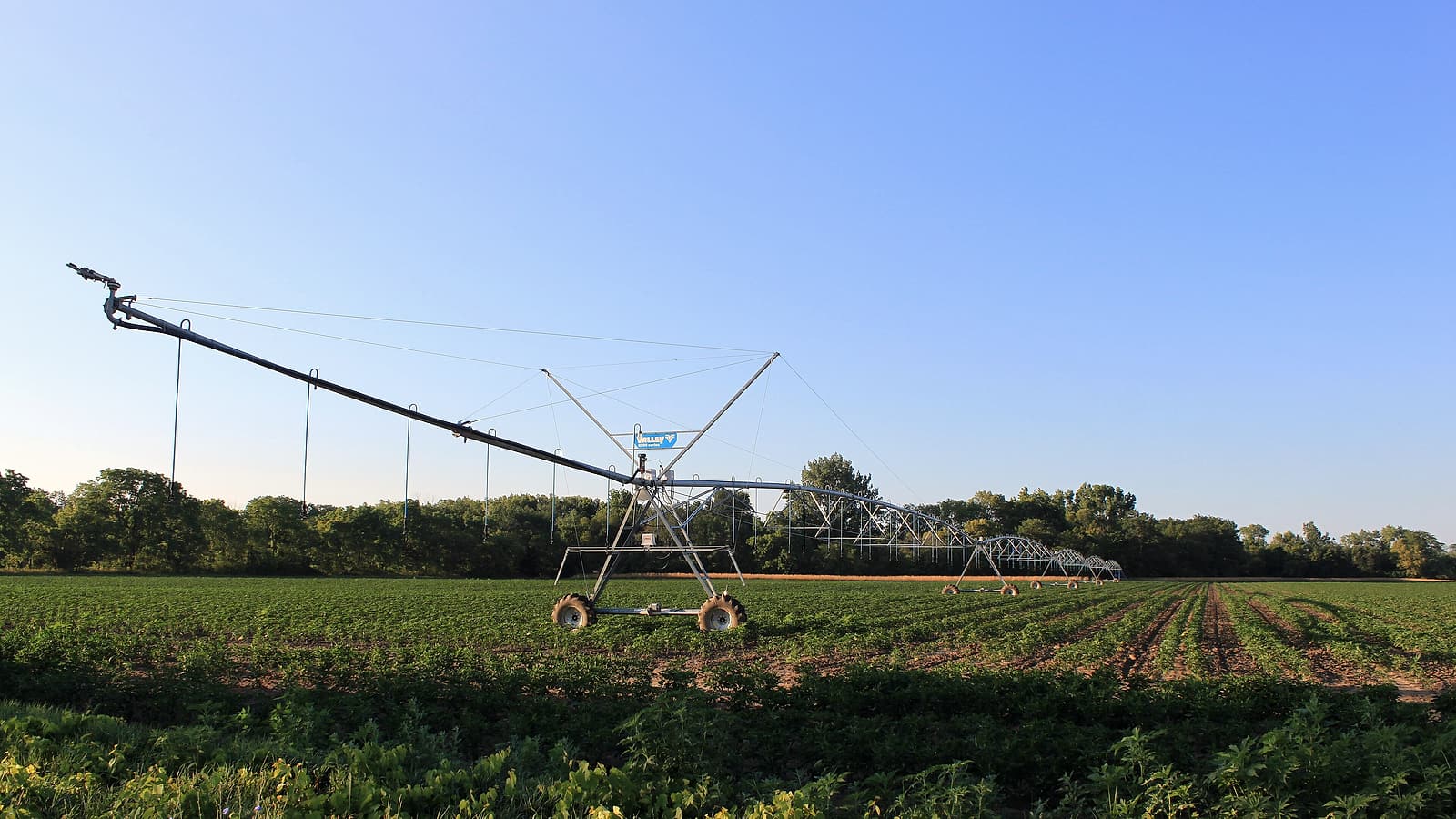
For irrigation the allowance is fixed by the duty of water: the quantity necessary, when economically and reasonably used, to irrigate a described tract for a season. It is expressed either as a volume per acre for the season or as a rate per acre, and it is set by statute, by agency rule, by decree, or by the terms of a district's delivery schedule.
The figure varies with crop, soil, elevation, growing season and conveyance losses, so a duty appropriate on sandy ground at altitude will be excessive on heavy soil in a warm valley. Decrees commonly state both a flow rate for instantaneous diversion and an annual volume cap, and a holder must satisfy both. Exceeding either is not the exercise of a larger right; it is a diversion without right.
Waste, and the standard used to identify it
Waste takes three forms in practice. Diverting more water than the use requires is the simplest. Applying water by a means so inefficient that the loss is unreasonable is the second. Using an unreasonable means of diversion, such as refusing to install a pump when the stream has fallen below a historic headgate, is the third, and it can defeat a senior's call outright.
Reasonableness is measured against custom and practice in the locality rather than against the best technology available. That standard is deliberately conservative, because retroactively condemning ordinary farming methods would unsettle every title in a basin. It is also not static: rules requiring measuring devices, lined ditches, or specified efficiencies in stressed basins raise the baseline by regulation rather than by litigation.
An irrigator who lines a ditch or converts to drip has reduced diversions, and in many states the water no longer diverted simply stays in the stream for others. Worse, several years of reduced diversion can support a claim that the unused portion has been lost through nonuse under an abandonment or forfeiture statute. Most states have responded with conservation savings provisions protecting the holder from forfeiture, and a few allow the saved water to be transferred. The protection is statutory and narrow, and it must be confirmed before a project starts rather than after.
Five quantities that are constantly confused
| Quantity | What it describes | Who may claim it | Role in a transfer |
|---|---|---|---|
| Paper right | The figure stated in the permit, certificate or decree | The holder, as a ceiling only | Irrelevant except as an upper bound |
| Historical diversion | Water actually taken through the headgate over a period of record | The holder | Starting point for quantification |
| Historical consumptive use | The portion consumed and never returned to the system | The holder | The amount that may be moved |
| Return flow | Surface runoff and deep percolation reaching the stream | Downstream appropriators, by reliance | Must be maintained in timing and amount |
| Salvaged water | Losses eliminated by lining, piping or improved application | Generally the stream, absent a statute | Transferable only where a statute allows |
The distinction between the third and fifth rows carries most transfer disputes. It also explains why an irrigator cannot expand consumption up to the paper figure after years of using less: enlargement of a historical use injures the juniors who grew up around the smaller one, which is the core of the no-injury rule applied to a change application.
How the limit is enforced, and where it gets fixed
Day to day, enforcement is administrative. A water master or commissioner measures diversions, compares them against the duty and the decree, and orders headgates adjusted. Penalties, injunctions and in serious cases criminal sanctions follow refusal. Complaints from neighboring users generate most inspections, because a diversion that exceeds the duty shows up first as a shortage downstream.
The definitive quantification usually happens elsewhere, in a general stream adjudication that decrees every right in the basin, where each claim is examined for the amount actually applied to beneficial use and the decree replaces whatever the older paper said. Landowners enrolled in federal farm programs face a parallel and unrelated set of obligations under the conservation compliance conditions attached to program benefits, and satisfying one regime says nothing about the other. Everything here rests on the framework described in prior appropriation and the ranking of rights by date, which supplies the priority that the quantity limit then bounds.
Points to carry away
- Beneficial use is stated in western codes as the basis, the measure and the limit of a water right.
- The paper quantity on a permit is a ceiling, not an entitlement to divert that amount.
- The duty of water fixes the allowance for irrigation, usually in acre-feet per acre for a season.
- Waste includes diverting more than the use requires and using an unreasonable means of diversion.
- Reasonableness is judged against customary practice in the area rather than against the best available method.
- Water salvaged by reducing losses generally belongs to the stream, not to the appropriator who saved it.
Questions readers ask
Is flood irrigation wasteful because sprinklers exist?
Generally not, on its own. The standard asks whether the means of diversion and application is reasonable in the locality, judged against customary practice, the character of the land, and the cost of alternatives. A method in general use in the area is rarely condemned merely because a more efficient one is available somewhere. The standard does move over time as practices change, and states have enacted rules requiring measuring devices, lined ditches or specific efficiencies in stressed basins, which shifts the baseline directly.
What is the difference between diverted water and consumed water?
Diverted water is everything taken through the headgate. Consumed water is the portion lost to the stream system through crop transpiration, evaporation and incorporation into product. The remainder returns as surface runoff or as deep percolation reaching the aquifer and eventually the stream. The distinction is decisive in transfers, because downstream users have rights built on those return flows, so a change is limited to the consumed portion rather than the diverted amount.
Can a right be obtained for water intended for future sale?
Not in most appropriation states, and emphatically not in some. The doctrine requires a specific plan to apply water to a defined beneficial use, not an intention to hold the right until a buyer appears. Anti-speculation rules have been applied to reject applications lacking an identified place and purpose of use, and to conditional decrees where diligence toward actual use stopped. Where a municipal supplier claims water for anticipated growth, states apply a separate and more forgiving growing-communities analysis.
Sources
- Cornell Legal Information Institute — 43 U.S.C. 372, Appurtenance of water right to landThe statutory statement that beneficial use is the basis and measure of a project water right.
- Cornell Legal Information Institute — 43 U.S.C. 383, Vested rights and State laws unaffectedFederal deference to state law on the control, appropriation and use of water.
- Cornell Legal Information Institute — 43 U.S.C. 661, Appropriation of waters; easementsRecognition of rights acquired by priority of possession under local custom and law.
- U.S. Geological Survey — Water ResourcesMeasurement of diversion, consumptive use and return flow in irrigated systems.
- USGS Water Science SchoolReference material on evapotranspiration, percolation and irrigation water balance.
- Bureau of Reclamation — WaterSMARTFederal conservation and efficiency programs that interact with state salvage rules.
Lawwise is a publication, not a law firm. This article states general rules and cites its sources; it is not advice about any particular case, and the law differs by state and changes over time.
More in Water Rights
Groundwater Management Areas and Pumping Limits
Most western states allocate groundwater by appropriation, while others apply absolute ownership, reasonable use or correlative rights. Where levels decline or wells interfere, a state agency may designate a management area after study and hearing. Designation supports a moratorium on new permits, well spacing, metering, allocations stated per irrigated acre, and scheduled reductions.
Interstate Compacts and Equitable Apportionment
Rivers crossing state lines are divided in three ways: a compact negotiated by the states and consented to by Congress, an equitable apportionment decreed by the Supreme Court, or an apportionment enacted by statute. A consented compact becomes federal law and cannot be altered by one state. Enforcement lies in the Court's exclusive original jurisdiction over controversies between states.
Abandonment and Statutory Forfeiture of a Water Right
A water right can be lost in two ways that are routinely confused. Abandonment is a common law doctrine requiring both nonuse and an intent to relinquish, proved by the party asserting it, with prolonged nonuse serving as evidence of intent rather than as a substitute for it. Forfeiture is statutory and operates on nonuse alone for a fixed term, commonly five years, subject to statutory excuses and to a declaration procedure with notice and a right to be heard.