Conjunctive Management of Surface Water and Groundwater
A well and a headgate can draw on the same water. The law treated them as separate systems for decades, and integrating them means deciding what a senior is owed when the harm arrives years after the pump was switched on.
The rule in short
Groundwater hydraulically connected to a stream is administered together with surface rights in most appropriation states. Pumping captures streamflow, but the effect arrives on a lag of months, years or decades, so curtailing a junior well may deliver nothing to the calling senior this season. States respond by classifying groundwater, approving augmentation plans that supply substitute water when depletions occur, and curtailing only where it will help.
An aquifer beside a stream is not a separate supply. Water moves between them continuously, and a well pumping from the connected material intercepts water that would otherwise have reached the channel. Western states nonetheless permitted wells for decades under statutes written as if the two were unrelated, and conjunctive management is the long project of correcting that without destroying the economies built in the meantime.
Classification comes first
Administration begins by deciding whether the groundwater is connected. States use categories: tributary groundwater, which is administered with surface rights on the same priority list; nontributary groundwater, which is not connected in any meaningful period and is allocated under separate rules, often by allowing depletion over a stated aquifer life; and intermediate categories for water whose connection is real but slow.
One state presumes all groundwater is tributary unless the claimant proves otherwise, which places the technical burden on the well owner. Others designate basins as nontributary by rule after study. The classification determines whether a well is exposed to a call at all, so it is contested harder than almost anything else in this field.
Why shutting off a well delivers nothing today
Pumping does not remove water from the stream at the moment the pump runs. The cone of depression expands outward, and the stream responds over time. A well close to the channel in a transmissive aquifer may show effects within weeks. A well several miles out may take years, and the effect continues for years after the pump stops.
That lag breaks the ordinary remedy. Curtailing a junior well in July to satisfy a senior's July call may produce water at the senior's headgate several seasons later, which is no help at all. The futile call principle therefore does heavy work here: an administering officer will not order a curtailment that produces no usable water for the caller, and the arrival timing must be shown rather than assumed.
The standard applied in most conjunctive systems is material injury, and it is a question about when water arrives as much as how much. A junior that depletes an equal volume but delivers replacement water at the wrong time has still injured the senior, because a farm needs water in the growing season and a delivery in November is worthless to it. Replacement obligations are therefore written month by month, and accounting is submitted on the same schedule.
Plans that let a junior keep pumping
The central innovation is the augmentation or replacement plan. A junior well owner acquires a supply of water it can deliver to the stream, quantifies its depletions in timing and amount, and commits to deliver replacement water whenever and wherever a senior would otherwise be short. With an approved plan the well operates out of priority lawfully, because the senior is made whole by substitution rather than by curtailment.
| Response | What it does | Timing | Approved by | Principal drawback |
|---|---|---|---|---|
| Curtailment order | Stops junior pumping in reverse priority | Immediate order, delayed effect | State engineer or water court | May deliver nothing in the current season |
| Augmentation plan | Delivers replacement water matching depletions | Continuing, month by month | Agency or water court decree | Requires acquiring a senior supply |
| Substitute supply plan | Temporary authorization while a plan is pending | Season by season | Agency, on an abbreviated record | Annual renewal, no long-term security |
| Recharge and banking credits | Puts water into the aquifer for later withdrawal | Credits accrue over years | Agency, with accounting rules | Losses and timing reduce the credit |
| Retirement of wells | Permanently removes depletions | Permanent | Agency, often funded by a subdistrict | Costly; removes land from production |
Replacement supplies are ordinarily acquired senior surface rights, which must themselves be moved to the new purpose through a change proceeding limited to historical consumptive use. That is the pinch point in most programs: the amount of replacement water available is bounded by the consumptive portion of the rights that can be bought, and it is always smaller than the pumping it must offset.
Groups, fees and management plans
Individual plans are expensive, so pumpers organize. Subdistricts and management associations levy fees on pumping, use the revenue to buy replacement supply and to retire wells, and operate a shared plan covering all members. Membership becomes the practical condition of continued pumping inside a designated management area, and the association's allocation rules do the day-to-day work that a decree could not.
Delivery entities play the same role on the surface side, so a landowner may hold an allocation from a district that assesses land and delivers by ditch and a pumping allocation from an association at once, with different accounting for each.
Where these disputes are decided
Conjunctive administration presupposes a list of rights that can be ranked, which is why states with active programs also have decrees produced by basin-wide adjudications. Disputes proceed first before the administering agency, on a record of models, pumping reports and gage data, then to a district or water court, and the reviewing court gives substantial weight to the agency's technical findings while examining whether the legal standard was correctly applied.
The pattern is consistent across states even where the labels differ. Classification decides exposure, modeling decides magnitude and timing, replacement decides whether pumping continues, and curtailment is the remedy of last resort because it is the one that helps the caller least.
Points to carry away
- Pumping from a connected aquifer reduces streamflow available to surface rights.
- States classify groundwater as tributary, nontributary or an intermediate category, and administration follows the classification.
- The effect of pumping on a stream arrives on a lag that can run from weeks to decades.
- Curtailment that would not deliver usable water to the senior is a futile call and is not ordered.
- An augmentation or replacement plan lets a junior well operate by supplying substitute water when depletions occur.
- A senior may be required to use a reasonably efficient means of diversion before a call is enforced.
Questions readers ask
How is stream depletion from a particular well measured?
It is calculated rather than measured. Analytical solutions estimate the fraction of pumping that reaches the stream over time from the well's distance, the aquifer's transmissivity and storage properties, and the streambed's conductance. Larger basins use numerical models calibrated against water level and streamflow records. The output is a depletion factor and a timing curve, which the agency then applies to reported pumping. Because the model drives every curtailment and every replacement obligation, model calibration is where most of the technical litigation happens.
Can a senior surface right be told to drill a well instead?
In some states, effectively yes. The doctrine requiring a reasonably efficient means of diversion, coupled with a policy of maximum utilization of the resource, has been used to require a senior to accept a delivered substitute supply or to adapt its diversion works rather than curtail an entire junior well field. The senior cannot be forced to bear the cost, and the substitute must be equivalent in quantity, timing and quality. States differ sharply on how far this can be pushed.
What happens to wells drilled before the state connected the two systems?
They are generally recognized with the priority date they earned, then administered against surface rights on that date, which usually makes them junior to the agricultural rights on the stream. Rather than shut them down, states have built transition mechanisms: phased reduction schedules, mitigation funded by pumping fees, retirement of some wells to protect others, and recharge programs that put water back in the aquifer. The transitions are negotiated as much as adjudicated, and they take years to complete.
Sources
- U.S. Geological Survey — Water ResourcesGroundwater and surface water interaction studies and the modeling used to estimate depletion.
- USGS Water Science SchoolReference material on aquifers, streamflow capture and recharge.
- USGS National Water Information SystemStreamflow and groundwater level records used to calibrate depletion models.
- Cornell Legal Information Institute — 43 U.S.C. 383, Vested rights and State laws unaffectedFederal deference to the state systems that integrate groundwater and surface administration.
- Cornell Legal Information Institute — 43 U.S.C. 666, Suits for adjudication of water rightsJoinder of the United States in comprehensive proceedings covering connected groundwater.
- Bureau of Reclamation — WaterSMARTFederal funding for recharge, banking and mitigation projects used in conjunctive programs.
Lawwise is a publication, not a law firm. This article states general rules and cites its sources; it is not advice about any particular case, and the law differs by state and changes over time.
More in Water Rights
Groundwater Management Areas and Pumping Limits
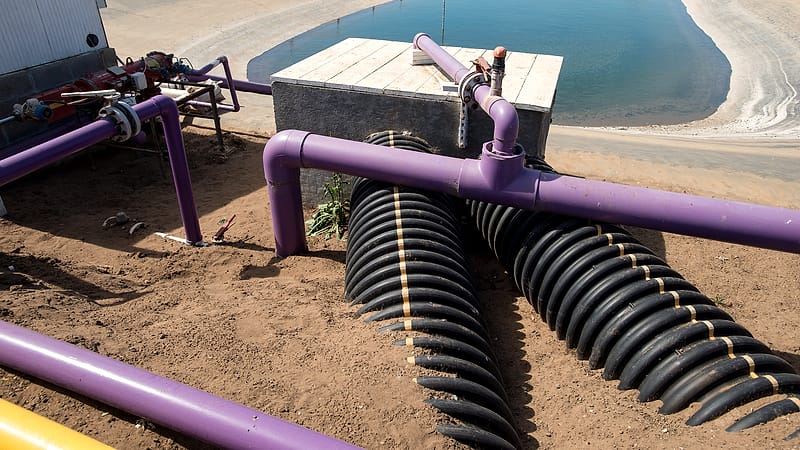
Most western states allocate groundwater by appropriation, while others apply absolute ownership, reasonable use or correlative rights. Where levels decline or wells interfere, a state agency may designate a management area after study and hearing. Designation supports a moratorium on new permits, well spacing, metering, allocations stated per irrigated acre, and scheduled reductions.
Interstate Compacts and Equitable Apportionment
Rivers crossing state lines are divided in three ways: a compact negotiated by the states and consented to by Congress, an equitable apportionment decreed by the Supreme Court, or an apportionment enacted by statute. A consented compact becomes federal law and cannot be altered by one state. Enforcement lies in the Court's exclusive original jurisdiction over controversies between states.
Abandonment and Statutory Forfeiture of a Water Right
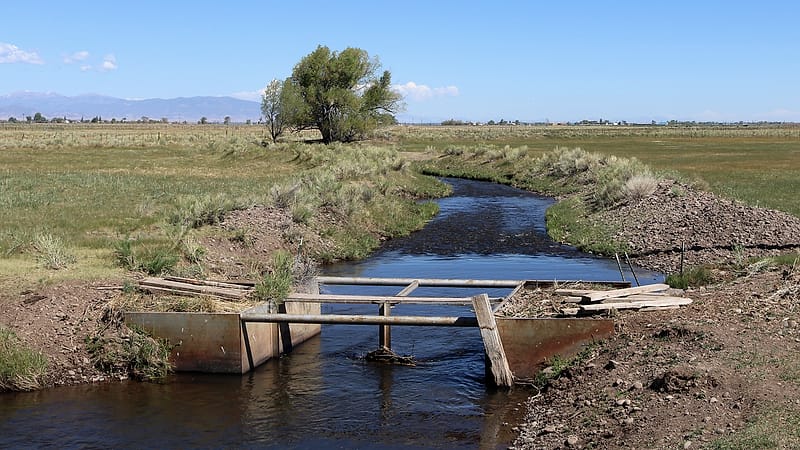
A water right can be lost in two ways that are routinely confused. Abandonment is a common law doctrine requiring both nonuse and an intent to relinquish, proved by the party asserting it, with prolonged nonuse serving as evidence of intent rather than as a substitute for it. Forfeiture is statutory and operates on nonuse alone for a fixed term, commonly five years, subject to statutory excuses and to a declaration procedure with notice and a right to be heard.