Out-of-Service Orders and Roadside Inspection Levels
An out-of-service order is not a citation and is not appealable at the roadside. It is a finding that the vehicle or the driver may not move, and it stays in force until a specific condition is satisfied rather than until someone is persuaded.
The rule in short
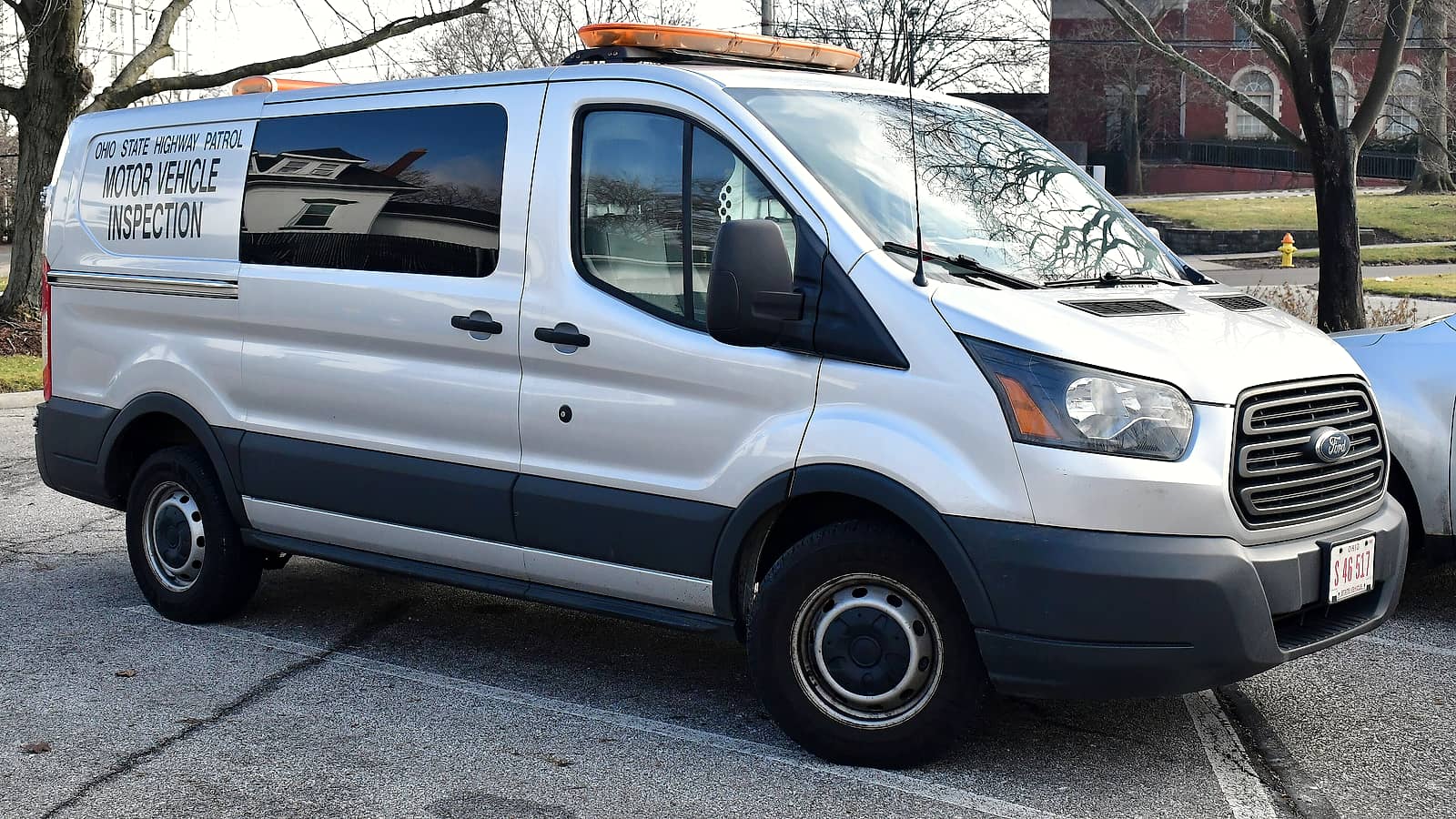
Roadside inspections follow the North American Standard levels, from a full driver and vehicle examination at Level I to a credentials-only check at Level III and a vehicle-only inspection at Level V. Findings that meet the out-of-service criteria stop the vehicle, the driver, or both. Under 49 CFR 396.9 a vehicle placed out of service may not be operated until the required repairs are completed, and the certification of repair on the inspection report must be returned within fifteen days.
Everything a carrier will later argue about begins with a document written at the side of a road in under an hour. The inspection report records what was examined, what was found, and whether anything met the out-of-service criteria. It is the source record for the measurement system, for the investigation that may follow, and for the plaintiff's expert in any crash case afterward.
What each level actually covers
Inspections follow the North American Standard levels used across the United States, Canada and Mexico. Level I is the complete examination: driver credentials, records of duty status, medical certification, alcohol and drug indicators, and a full vehicle inspection including an examination underneath. Level II covers the same driver items with a walk-around vehicle inspection rather than an under-vehicle one.
Level III is driver and credentials only, with no vehicle examination at all. Level IV is a one-time special examination, typically conducted to gather data on a particular component. Level V is a vehicle-only inspection performed without the driver, often at a terminal. Higher levels cover enhanced radioactive shipment inspections, jurisdiction-specific mandated inspections, and electronic inspections conducted without a physical stop.
Vehicle findings that stop the equipment
The out-of-service criteria are applied to the vehicle independently of any citation. Brake defects dominate the category, both in count and in consequence: defective brakes beyond the permitted number on a combination, brakes out of adjustment, air loss beyond the allowable rate. Tires below tread depth, with exposed cord or with a visible bulge, are next. Steering, coupling devices, suspension components, lighting on the required positions, and cargo securement failures each supply their own grounds.
Under 49 CFR 396.9 a vehicle declared out of service may not be operated until the required repairs are satisfactorily completed. The certification portion of the report must be signed and the report returned to the issuing agency within fifteen days of the inspection date, and the carrier must keep a copy for twelve months. Carriers lose this deadline routinely, because the driver hands the report to a dispatcher and it never reaches whoever files.
A vehicle repaired promptly and a report returned late still produces a violation, and it is a violation the carrier created after the fact. The report goes to the carrier through the driver, and the driver's next stop is usually not the office. Fleets that solve this photograph the report at the scene and route the image to compliance the same day, leaving the paper copy to follow whenever the driver gets home.
Driver findings that stop the person
A driver may be placed out of service independently of the vehicle. Section 395.13 covers the hours case: a driver found in violation of the driving or duty limits is declared out of service and may not operate until enough time has passed to bring him back into compliance, which for a property carrier means the required consecutive off-duty hours, and for a multi-day violation means the restart period. The limits themselves are set out in the driving, duty and rest rules.
Other driver grounds do not resolve with time. No valid commercial license for the vehicle class, a disqualified or suspended license, no medical certification, an alcohol concentration at or above the prohibited level, and a false record of duty status each place the driver out of service on the spot. Whether the underlying qualification existed at all is answered by the file the carrier was required to build, which is why a driver-side order so often turns into an office-side finding.
| Level | Driver examined | Vehicle examined | Typical setting |
|---|---|---|---|
| Level I | Full credentials and records | Full, including under-vehicle | Fixed scale or inspection facility |
| Level II | Full credentials and records | Walk-around only | Roadside stop without a pit |
| Level III | Full credentials and records | None | Traffic stop or checkpoint |
| Level V | None; driver need not be present | Full vehicle inspection | Terminal or carrier facility |
| Level VI | Full credentials and records | Enhanced, for specified radioactive loads | Designated route inspection point |
The hazardous materials overlay
Placarded loads add a separate set of findings that are checked at every level involving the vehicle. Placards must match the material and be displayed on all four sides. Shipping papers must be present, complete, and within the driver's reach or in the prescribed location when he leaves the cab. The emergency response information and the emergency response telephone number must be there. Package markings, labels and segregation are examined against the load.
Each of these can produce an out-of-service order on a vehicle that is mechanically perfect. The documentary requirements are set out in the classification, packaging and shipping paper rules, and they are the part of the load an inspector can verify fastest, which is why they are checked first.
What happens to the report afterward
The inspection is transmitted to the federal system and attached to the carrier's identification number, where it enters the calculation described in the safety measurement and intervention system. Out-of-service findings carry additional weight there, so a single order affects the percentile more than several minor violations recorded on the same report.
Errors are corrected through the agency's data challenge process, not by argument at the scene. The grounds that succeed are factual: the violation belongs to another carrier, the equipment identified was not the carrier's, the driver was not employed on that date, the citation was dismissed on the merits. Challenges filed promptly are worth more than challenges filed later, because the weight assigned to a record decays as it ages, and by the time a slow challenge succeeds the record it removes has stopped mattering.
Points to carry away
- Level I is the full driver and vehicle inspection; Level III examines credentials only.
- Level V is a vehicle-only inspection conducted without the driver present.
- A driver over an hours limit is placed out of service until enough off-duty time accrues.
- A vehicle out-of-service defect must be repaired before the vehicle moves under its own power.
- The repair certification on the inspection report is returned within fifteen days of the inspection.
- Out-of-service violations are weighted heavily in the safety measurement calculation.
Questions readers ask
Who may remove an out-of-service sticker?
Not the driver, and not by driving away. The sticker stays until the defect that produced it has been corrected, and the regulations bar operating the vehicle until the required repairs are satisfactorily completed. In practice the repair is made where the vehicle sits or after a tow, and the person who performs it removes the marker and completes the certification portion of the inspection report. Removing a sticker without the repair is treated as a separate and considerably more serious matter than the original defect.
Does an out-of-service order mean a citation was issued?
No. The two are independent. An out-of-service order is a safety finding under the inspection criteria; a citation is a charge under state law that goes to a court. An inspection can produce an order without any citation, a citation without any order, both, or neither. This matters when the record is later contested, because a dismissed citation does not automatically remove the associated violation from the inspection record. That removal has to be requested through the data correction process separately.
How long does an inspection stay on a carrier's record?
Inspection results remain visible for years, but their weight in the measurement calculation decays with age, so a recent violation affects a carrier far more than an old one of the same kind. Clean inspections are recorded too and work in the carrier's favor by increasing the base against which violations are measured. The practical consequence is that a carrier recovering from a bad period improves fastest by running more inspections, not fewer.
Sources
- eCFR — 49 CFR 396.9, Inspection of Motor Vehicles and Intermodal Equipment in OperationThe authority to declare a vehicle out of service and the fifteen-day repair certification.
- eCFR — 49 CFR 395.13, Drivers Declared Out of ServiceWhen a driver is placed out of service for an hours violation and what ends the order.
- eCFR — 49 CFR Part 396, Inspection, Repair and MaintenanceThe systematic maintenance, driver vehicle inspection report and periodic inspection requirements.
- eCFR — 49 CFR Part 393, Parts and Accessories Necessary for Safe OperationThe equipment standards most roadside vehicle violations are written against.
- eCFR — 49 CFR Part 350, Motor Carrier Safety Assistance ProgramThe federal and state enforcement partnership under which roadside inspections are conducted.
- eCFR — 49 CFR 383.51, Disqualification of DriversThe offenses and violation patterns that disqualify a commercial driver's license holder.
Lawwise is a publication, not a law firm. This article states general rules and cites its sources; it is not advice about any particular case, and the law differs by state and changes over time.
More in Motor Carrier Law
Cargo Loss and Damage Claims Against a Carrier
Under 49 U.S.C. 14706 a receiving carrier is liable for the actual loss or injury to property it transports in interstate commerce. The claimant proves delivery in good condition, arrival short or damaged, and the amount of the loss. The carrier escapes only by proving freedom from negligence and one of five excepted causes. The bill of lading may not allow less than nine months to file a claim, or less than two years to sue after disallowance.
Equipment Leasing and Owner-Operator Protections
A carrier operating equipment it does not own must have a written lease meeting 49 CFR 376.12. The lease must state the compensation, provide payment within fifteen days of submission of the delivery documents, itemize every chargeback and how it is computed, disclose insurance charges, and account for any escrow fund with interest and its return within forty-five days of termination. Violations may be pursued privately under 49 U.S.C. 14704.

Drug and Alcohol Testing Programs and the Clearinghouse
A motor carrier employing drivers who operate vehicles requiring a commercial driver's license must run a testing program under 49 CFR Part 382 using the procedures in 49 CFR Part 40. Six categories of test are required: pre-employment, random, post-accident, reasonable suspicion, return-to-duty and follow-up. A full clearinghouse query precedes employment and a limited query runs at least annually. A driver with a violation is prohibited until the return-to-duty process is complete.