Economic and Unfair Labor Practice Strikes Compared
Both groups are still employees, both keep the protection of the Act, and both must offer unconditionally to return. What separates them is whether the employer may keep the person hired to do the work, and that single difference decides the outcome of most disputes.
The rule in short
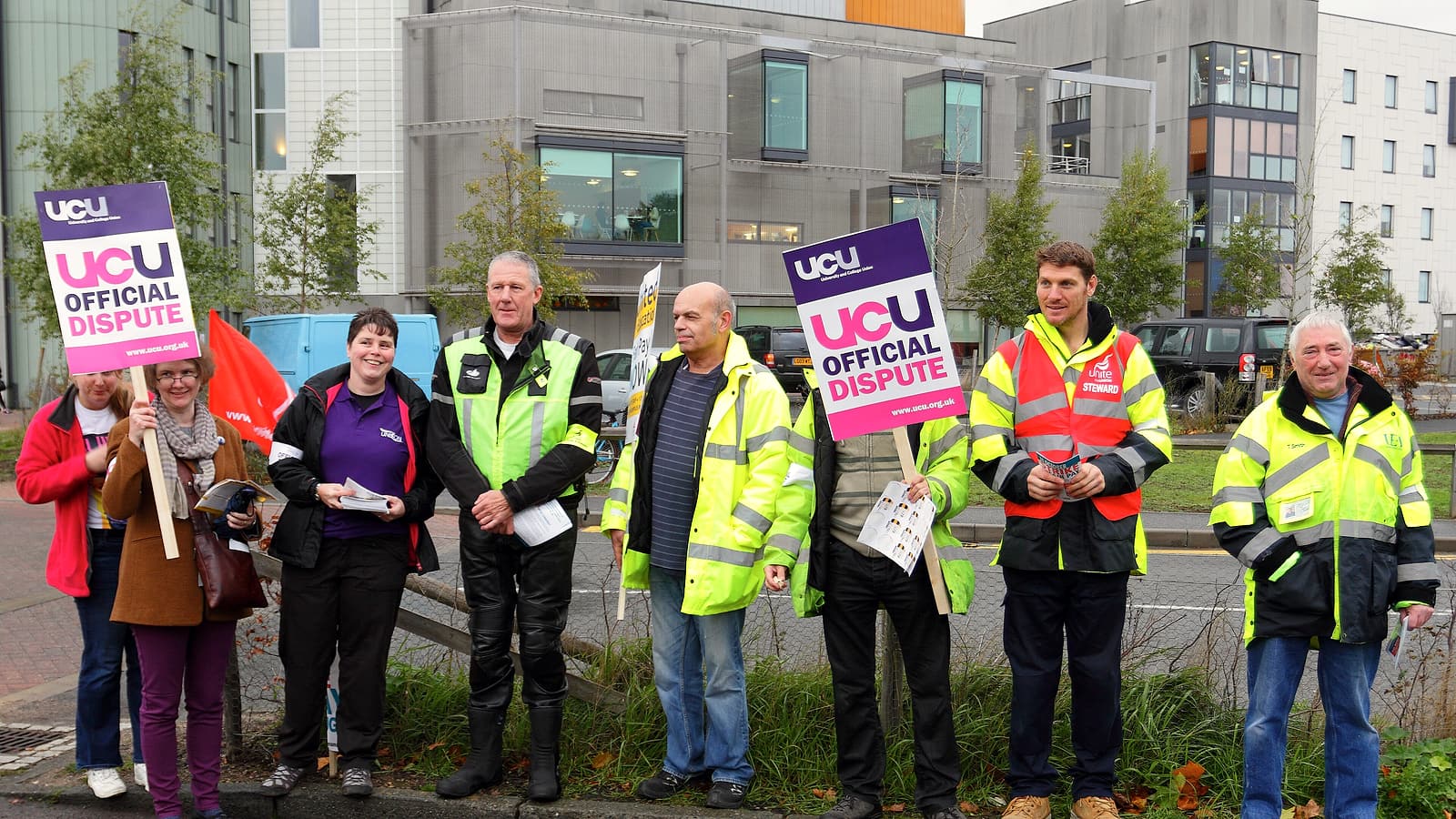
A strike over wages, hours or working conditions is an economic strike. The employer may hire permanent replacements, and strikers are entitled not to displace them but to recall as substantially equivalent vacancies arise. A strike caused or prolonged by an employer's unfair labor practices is different: those strikers are entitled to reinstatement on an unconditional offer to return, even if replacements must be discharged, with back pay running if reinstatement is not made promptly.
Strikers do not stop being employees. The definition in Section 2 continues to cover a worker whose work has ceased in connection with a current labor dispute, and Section 13 preserves the right to strike against being narrowed by implication. What varies is the remedy at the end, and that turns entirely on the cause of the stoppage.
Protection first, classification second
Before asking which kind of strike occurred, ask whether the stoppage was protected at all. A strike is protected concerted activity when employees act together over wages, hours or conditions of employment. It loses protection when it breaches a no-strike clause, occurs during the sixty-day period Section 8(d) requires before terminating or modifying a contract, or occurs at a health care institution without the ten days' written notice Section 8(g) demands.
Protection is also lost by the manner of the stoppage. Intermittent stoppages designed to harass, partial strikes in which employees remain at work but refuse assigned duties, slowdowns, and occupations of the employer's property are all outside. So is conduct disparaging the employer's product in terms disconnected from the dispute, and so is violence.
The economic strike and the replacement rule
Where the dispute is over terms, the employer may continue operating and may hire replacements. It may promise those replacements permanent employment, and having done so it need not discharge them to make room for returning strikers. That rule is a judicial gloss rather than statutory text, and it coexists uneasily with the prohibition on discharging anyone for striking, but it is settled.
What the employer owes instead is recall. On an unconditional offer to return, economic strikers not immediately reinstated go onto a preferential list and must be offered substantially equivalent positions as they become available, unless the employer shows a legitimate and substantial business justification for not doing so. The obligation is open-ended and does not expire with the strike.
Whether a replacement is permanent is a factual question about what the employer told the person at hire and what the records show. Employers that describe replacements as permanent in press statements but hire them on temporary paperwork routinely lose the point. Evidence that the replacement hiring was motivated by a desire to punish strikers or to break the union, rather than to continue operations, has also been held to destroy the defense, and the Board's treatment of that motive inquiry has shifted more than once.
The strike an employer caused
Where the strike was caused or prolonged by the employer's own unfair labor practices, the replacement rule falls away. On an unconditional offer to return, those strikers are entitled to reinstatement to their former positions, and replacements must be released to make room. If reinstatement is not made promptly, back pay runs from a few days after the offer until the offer of reinstatement is made, and the employer carries the burden of showing why any delay was justified.
The cause need not be the only reason for the stoppage. A strike begun over economics converts to an unfair labor practice strike if unlawful conduct during the dispute prolongs it, and the union's contemporaneous statements, meeting minutes and strike votes are the evidence that establishes conversion. Conduct at the table is therefore doubly consequential: an employer that violates the duty to bargain in good faith may find that the same violation changes every striker's reinstatement rights.
The two categories side by side
| Question | Economic strike | Unfair labor practice strike | Unprotected stoppage |
|---|---|---|---|
| Cause | A dispute over terms of employment | Caused or prolonged by an employer violation | Any cause; the manner or timing removes protection |
| Permanent replacement | Permitted | Not permitted | Irrelevant; participants may be discharged |
| On an unconditional offer to return | Placed on a preferential recall list | Immediate reinstatement, displacing replacements | No right to return |
| Back pay | From refusal of a vacancy onward | From shortly after the offer to return | None |
| Voting eligibility | Eligible within twelve months of commencement | Eligible; replacements may be challenged | Depends on whether employment survived |
The offer to return, and what forfeits it
Nothing happens until an unconditional offer to return is made. An offer conditioned on the discharge of replacements, on a wage increase, or on settlement of the underlying dispute is not unconditional and starts no clock. The offer may be made by the union on behalf of all strikers, and a written offer with a date and a delivery record is worth far more than a conversation.
Individual strikers can forfeit reinstatement by serious misconduct, judged against whether the conduct would reasonably tend to coerce other employees. Employers frequently rely on a good-faith belief of misconduct, which shifts the inquiry to what the employer knew and when.
Discipline meetings held during or after a strike bring their own procedural questions, since an employee questioned about picket line conduct may invoke the right to a representative at an investigatory interview, and a discharge that follows will usually be tested by an arbitrator applying the contract's just cause standard. Employers considering the mirror-image tactic should read the separate rules on lockouts and the use of replacements during one, which are not symmetrical with these.
Points to carry away
- Strikers remain employees within the meaning of the Act for the entire duration of a strike.
- An economic striker may be permanently replaced but not discharged for striking.
- Economic strikers are entitled to recall as substantially equivalent positions become available.
- A strike caused or prolonged by unfair labor practices carries a right to reinstatement over replacements.
- Reinstatement rights in either case begin with an unconditional offer to return to work.
- Economic strikers may vote in an election held within twelve months of the strike's commencement.
Questions readers ask
Does a striker lose health insurance during the strike?
Coverage is governed by the plan and the collective bargaining agreement rather than by strike status alone, and an employer may generally stop paying premiums for employees performing no work if it has done so consistently and without discriminatory purpose. What it may not do is cut off benefits selectively to punish strikers while continuing them for crossovers doing the same jobs. Changes to a benefit plan during a strike are also a change to a term of employment, which carries its own bargaining obligation.
Are replacements entitled to vote in an election?
Permanent replacements employed in the unit on the eligibility date are ordinarily eligible to vote. Economic strikers are also eligible in an election conducted within twelve months of the strike's commencement, which means both groups may appear on the list and the ballots of strikers or replacements are often challenged. Temporary replacements hired only for the duration of the dispute are not permanent employees and their eligibility is contested case by case, usually on evidence of what they were told at hire.
Can a union call a strike while a contract is in force?
Only if the agreement permits it. Most contracts contain a no-strike clause, and a stoppage in breach of one is unprotected, exposing participants to discharge and the union to a damages suit in federal court. A no-strike promise is generally read as coextensive with the duty to arbitrate, so disputes the contract sends to arbitration may not be struck over. Some agreements preserve the right to strike over safety or over a failure to comply with an arbitration award.
Sources
- Cornell Legal Information Institute — 29 U.S.C. 163, Right to strike preservedThe provision preserving the right to strike against implied limitation.
- Cornell Legal Information Institute — 29 U.S.C. 157, Right of employees as to organization and collective bargainingThe Section 7 protection under which a work stoppage is concerted activity.
- Cornell Legal Information Institute — 29 U.S.C. 152, DefinitionsThe definition of employee, which continues to cover a worker whose work has ceased because of a labor dispute.
- Cornell Legal Information Institute — 29 U.S.C. 158, Unfair labor practicesThe 8(d) cooling-off period, the 8(g) health care notice and the conduct that converts a strike.
- Cornell Legal Information Institute — 29 U.S.C. 159, Representatives and electionsSection 9(c)(3), which fixes the voting eligibility of economic strikers.
- National Labor Relations Board — National Labor Relations ActThe statutory text as the agency publishes it, section by section.
Lawwise is a publication, not a law firm. This article states general rules and cites its sources; it is not advice about any particular case, and the law differs by state and changes over time.
More in Labor Relations
Grievance Arbitration and the Narrow Standard of Review
Section 301 of the Labor Management Relations Act gives federal courts jurisdiction over suits for violation of contracts between an employer and a labor organization, and the law built on it favors arbitration. A court orders arbitration unless it can say with positive assurance that the clause does not cover the dispute. An award stands if it draws its essence from the agreement.

The Duty to Bargain in Good Faith, and Impasse
Section 8(d) defines bargaining as the mutual obligation to meet at reasonable times and confer in good faith over wages, hours and other terms of employment, while compelling neither agreement nor concession. A party seeking to modify a contract must give sixty days' written notice and notify federal and state mediation agencies within thirty days after it. On genuine impasse an employer may implement its pre-impasse offers.
Dues Checkoff, Union Security and Right-to-Work States
The proviso to Section 8(a)(3) permits an agreement requiring membership as a condition of employment no earlier than the thirtieth day after hire, and the seventh day in construction. Membership means only periodic dues and initiation fees. Section 302 permits deduction only under a written assignment not irrevocable for more than one year or beyond the contract's termination. Section 14(b) lets a state forbid the clause.